
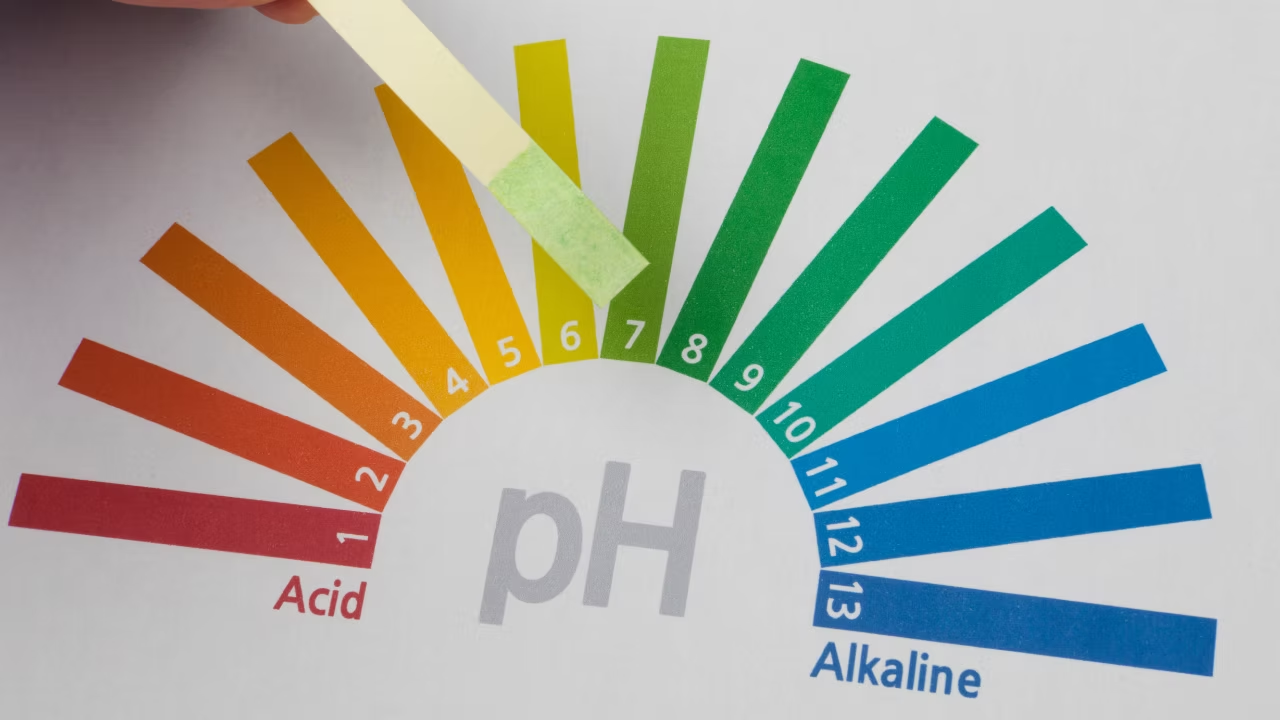
What is pH
pH stands for ‘potential of hydrogen’, it is a measure of the concentration of hydrogen ions in water. pH range is from 0 to 14 with 7 being referred to as a ‘neutral’ pH. pH less than 7 indicates acidic conditions, whereas a pH greater than 7 indicates alkaline conditions. (University of London, 2023)
pH in cosmetics
In cosmetic products we only have to think about pH for any products that contain water. Without water there is no pH, as pH needs charge – which water provides. So any anhydrous cosmetics products (oil only products) will not have a pH.
Example of Products with pH:
- Facial mists
- Toners
- Lotions
- Conditioners
- Creams
- Serums
- Shower gels
- Shampoos
The pH of our skin is around 5.5, therefore most cosmetic products are generally adjusted to a pH of around 5.5. Not all our cosmetics fall into this pH range as some cosmetic products perform better at higher or lower pH ranges. Soaps for example tend to be a pH of 9 – 10, where as chemical peels can have a pH of 3 – 4.
The pH of a cosmetic product can drift during the course of its shelf life. It can drift by 10% either up or down, you cannot predict which way it will drift. This is not something we can control either. For that reason as cosmetic formulators we set pH ranges that will account for any drift that occurs. The most common pH range for cosmetic products is 5.3 – 5.8; most cosmetic products will be pH adjusted to fall within this range.
In cosmetic products we can measure pH in two ways:
pH strips
pH strips are an inexpensive way to measure pH. A pH strip has two small squares containing pH sensitive dye. They work by immersing the strip into the cosmetic product. Then wipe the excess colour off the strip and the small squares on the strip will change colour depending on the pH level. You can match the colour of the strip against the graph on the packaging where you can determine the pH of your cosmetic. You will need a need strip each time you take a new pH measurement.
2. pH Meter
This is a piece of equipment that provides a more precise measurement of pH. It consists of a probe and a meter, the probe is immersed into a cosmetic product and then read for its result. You may need to wait for the reading to stabilise, similar to when you weigh yourself on a digital scale. Ensure you calibrate the pH meter using standard buffer solutions to ensure accuracy.
How do we make pH buffers
To increase the pH of a cosmetic product you will need an alkaline buffer solution. You make this by combing 70% water with 30% sodium hydroxide. You would use this for example if you wanted to increase the pH from 3 to 5.
To make 100g of alkaline buffer solution:
- 70g Distilled Water
- 30g Sodium Hydroxide
Warm the water using a water bath. Always add the sodium hydroxide to the water and never the other way round. Mix until fully dissolved.
To decrease the pH of a cosmetic product you will need an acidic buffer solution. You can make this by combing 50% water with 50% citric acid. You would use this for example if you wanted to decrease the pH from 9 to 5.
To make 100g of acidic buffer solution:
- 50g Distilled Water
- 50g Citric Acid
Warm the water using a water bath. Always add the citric acid to the water and never the other way round. Mix until fully dissolved.
References
- University of London. (2023). What is pH. Date accessed [11/02/2024]. Available at: https://www.qmul.ac.uk/chesswatch/water-quality-sensors/ph/